Práctico
Secrets of La Ràpita (Part 5): the wind commands
Locations mentioned
Locations mentioned
Secrets of La Ràpita (Part 5): the wind commands
This is the fifth instalment of the series Secrets of La Ràpita that you won't find on Google. Today we are talking about the only force that holds more power than the local council in this area. Here, you do not check the weather app to see if it is sunny; you check where the wind is blowing to decide which beach to go to. If you do not understand the wind, you will end up eating sand.
The Wind is in Charge: A Local Survival Guide
The Ebro Delta is flat. Very flat. This means that when the wind decides to blow, there are no mountains to stop it. The inexperienced tourist arrives at the beach, sees the towels flying, gets annoyed, and heads back to their apartment. The local resident of La Ràpita knows that there is always a "plan B" where the water is calm and not a leaf stirs.
You just need to get to know the three main protagonists of the local climate.
1. Reaction to the Wind: Tourist vs. Local
| Situation | The Tourist… | The Local… |
|---|---|---|
| Strong Mestral Wind | Goes to the open sea beach and their umbrella flies away. | Heads to the inner side of the Bahía de los Alfacs or hides in the southern coves. |
| Windless Morning | Sleeps in late. | Goes to the beach at 9:00 am before the thermal wind picks up at midday. |
| Llevant Wind | Tries to bathe among brown waves. | Goes for a esmorzar de forquilla or visits a museum. |
Fishermen's Tip: If you see the port flags waving towards the south in the morning, the Mestral will be blowing all day. If they are still at 10:00, there will probably be calm or gentle Garbí wind in the afternoon.
2. The Three Winds You Need to Know (and What to Do with Each)
The Mestral (Northwest): The Boss of the Delta
It is the most famous wind. It blows from the mountains towards the sea. It is usually strong, gusty, and leaves a perfectly clear and clean blue sky.
- The Downside: On open beaches, it bombards you with sand.
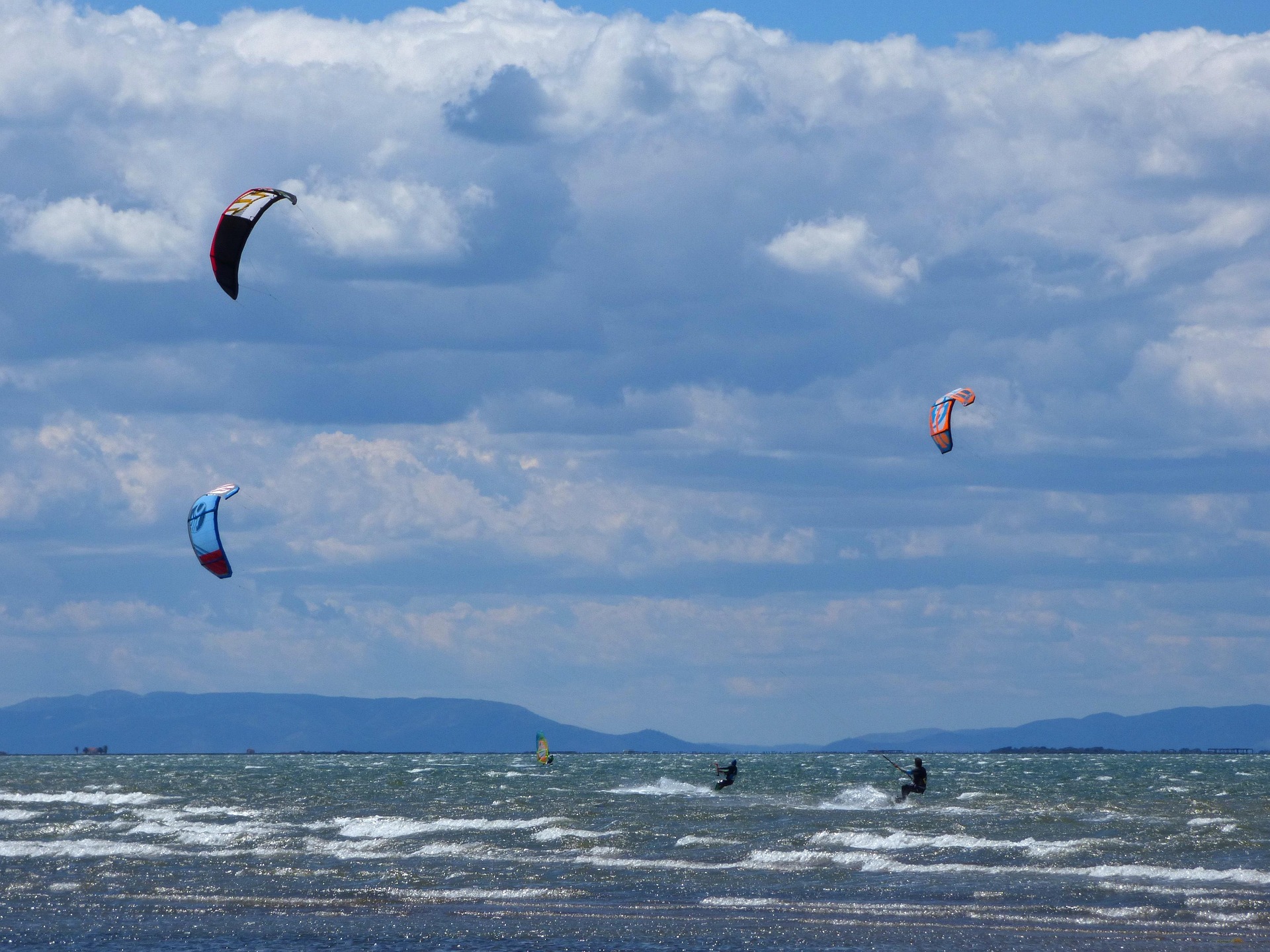
- Local Trick: Go to the Platja del Trabucador (bay side). Since the wind comes from the land towards the water, the shore acts as a shield, there are no waves, and the water is as flat as a mirror. It's the perfect time to see kitesurfers flying or visit the protected coves of Cap-Roig (heading towards l'Ampolla).
- Alternative Plan: If it's unbearable on the coast, it's the ideal day to do the Ruta de la Foradada in the mountains, as the wind will refresh you on the way up.
The Garbí (Southwest): The Summer Lifesaver
It is the thermal wind. Summer mornings in the Delta are usually calm and humidly hot. Around 1:00 or 2:00 pm, the land heats up, sucks in the cool air from the sea, and the Garbí wind picks up.
- What it Means for You: Mornings (until 1:00 pm) are for the open sea beach (Eucaliptus, Riumar). From midday onwards, the Garbí stirs up some waves and brings a fresh breeze that saves your life if you're eating paella on a terrace.
The Llevant (East): The Party Pooper
It comes from the Mediterranean Sea towards the land. It brings humidity, low clouds, strong waves, and often rain. It stirs up the sea floor and the water loses its nice color.
- What to Do: Forget about the beach. It's the day for the "interior route". Go shopping at the Mercado Municipal, hide in a tavern to eat a good rice dish, or visit the Museu de la Mar de l'Ebre in La Ràpita.
Quick Reference Table: Wind → Daily Plan
| Wind | Direction | Typical Speed | Best Beach Plan | Best Alternative Plan |
|---|---|---|---|---|
| Mestral | NW (northwest) | 20-40 km/h, gusts of 60+ | Trabucador (bay side), Cap-Roig coves | Foradada Route, Montsià hiking |
| Garbí | SW (southwest) | 10-25 km/h, picks up at 13-14h | Mornings: Eucaliptus, Riumar. Afternoons: bay | Sunny terrace, harbour stroll |
| Llevant | E (east) | 15-35 km/h, waves 1-2m | Forget the beach | Sea Museum, fork breakfast, inner rice fields |
| Calma | — | <10 km/h | Any beach, kayak, SUP | Cycling routes in the Delta |

Tip: Days with strong Mestral winds (>30 km/h) are the best for watching kitesurfing in Trabucador as spectators. Bring your camera.
3. When Each Wind Blows (by Month)
Not all winds are equal throughout the year. This is what local experience says:
- October to March: Mestral dominates. Cold but sunny days, clear skies. The best time for photography (the light is brutal).
- April to June: Transition. Calms alternate with occasional Llevant entries. The rice fields fill with water — spectacular landscape for birdwatching.
- July to September: Garbí prevails. Mornings of calm for the beach, afternoons of breeze. This is when boat trips are most enjoyable.
- All year round: Llevant arrives unannounced 3-4 times a month, lasts 1-3 days, and leaves. Don't cancel your trip because of it — have a "Llevant plan" ready.
Don't leave your vacation plan to chance.
Create a quick note on your mobile called "Wind Rules". The next time you look out the window and see the trees swaying, you'll know exactly which side of the coast to go to save the day. And if things get rough and a Llevant storm sets in, you can always stay at Lo Peix Apartments, prepare a coffee in your kitchen, and watch the rough sea from the window, safe and sound.
With this, you now have the complete local survival kit. You're now ready to step into La Ràpita knowing where to go, what to eat, what to read, and how to avoid swallowing sand.